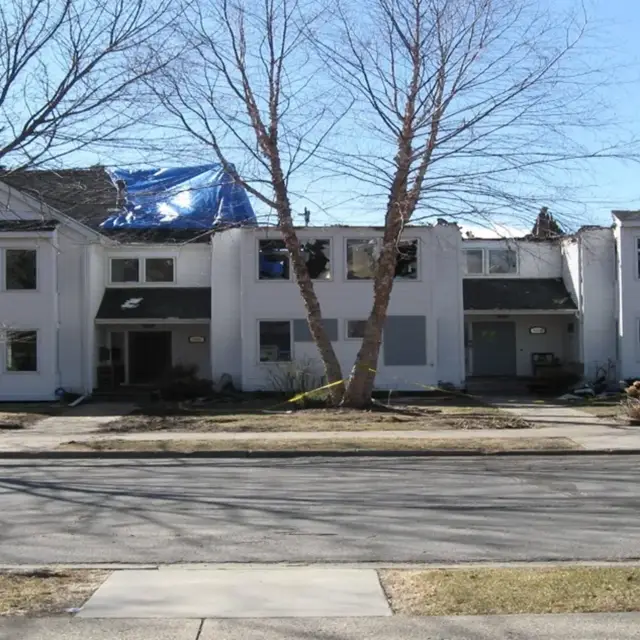
HOA, Townhome & Condo Association Restoration
Roofs, siding, decks, and multi-unit water losses for homeowner, townhome, and condominium associations — scoped for the board, documented for the carrier, and sequenced around the people who live there.
We answer live, 24/7/365
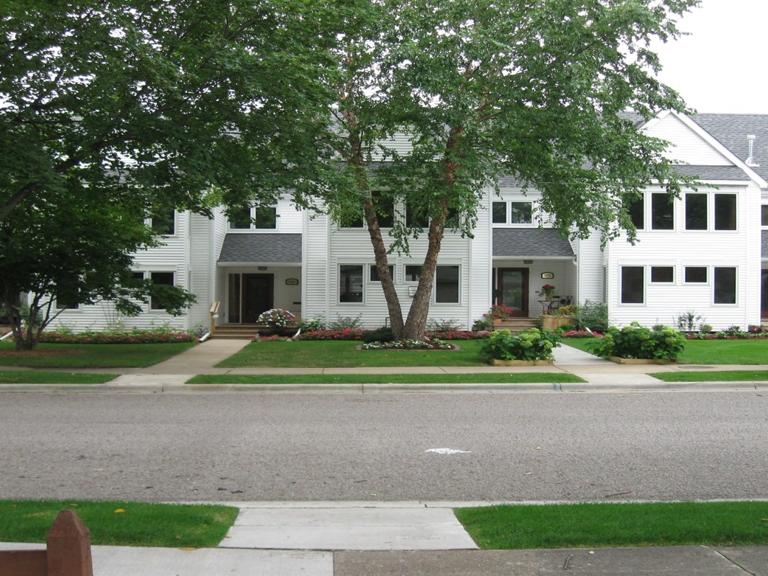
Restoration for Homeowner, Townhome & Condominium Associations
An association loss is rarely one building’s problem. Hail hits every roof on the property at once. An attic fire crosses a shared wall into the units on either side. A supply line lets go on the fourth floor and becomes a fourth, third, and second-floor problem within minutes. The repair itself is ordinary construction — the hard part is scope, sequence, and getting a board to a decision.
Attached housing fails in directions detached housing does not. In a townhome row the damage travels sideways through shared framing; in a stacked building it travels down. Either way, by the time someone calls it is often several homes, one association, and more than one insurance policy. Speed matters more here than almost anywhere else, because every hour water moves it adds another unit to the claim — and drying has to be verified in each affected home, since the assembly between two floors can read dry from above and still be wet from below.
Who owns what is the first question. In a Minnesota common interest community, the association’s master policy typically covers the roof, siding, and other common elements, while individual owners carry their own policy — an HO-6 in a condominium — for what is inside their walls. Where that line falls depends on the association’s declarations, and getting it wrong is where association claims most often stall, with one carrier waiting on the other while the building sits open. We scope the loss per unit and document it so both claims can move in parallel.
Boards do not decide the way homeowners do. A homeowner approves a scope in an afternoon; a board may need a meeting, a reserve review, and sometimes a vote on a special assessment. We build estimates that survive that process — itemized by building, in the Xactimate format carriers expect, with enough detail that a board can compare bids and a property manager can explain the number to owners. Then we hold the schedule while the decision works its way through.
Meanwhile the people in the unaffected units still live there. They still need the hallway, the elevator, and their own front door. Containment and staging are planned around that, not around what is convenient for the crew.
We take part in the Twin Cities multi-housing industry — including exhibiting at the Minnesota Multi Housing Association conference — and have worked across the metro since 1977, from single-building townhome rows to multi-building communities and stacked condominium buildings. We are IICRC-certified in both water restoration and mold remediation, and one team carries the work from the first containment through the final finish. If your property manager already has a process, we work inside it. If your board is doing this for the first time, we will tell you what normally happens next.
Roofing & storm damage
Hail and wind claims across multiple buildings, inspected and documented unit by unit so nothing is missed in the scope
Siding & exterior envelope
Siding, soffit, fascia, and trim replacement matched across an entire association so the buildings still look like one community
Multi-unit water losses
A supply line that fails upstairs runs down through every home beneath it — ice dams, burst pipes, and roof leaks that move through shared framing. We dry all of them, not just the unit that called
Fire & smoke through shared spaces
Attic and unit fires cross shared walls, and smoke travels corridors and shafts well beyond the unit that burned. Emergency board-up through full reconstruction of the affected path
Mold remediation
Wet assemblies between floors and behind shared walls are where mold starts. We dry to a documented standard and remediate to IICRC S520 when it has already begun
Master policy & owner policy separation
Clear documentation of what belongs to the association's scope and what belongs to the unit owner, so both claims can move at once instead of one waiting on the other
Board & property manager coordination
Scopes, timelines, and cost breakdowns prepared for board meetings, reserve planning, and special assessment discussions
Work sequenced around residents
Negative-air containment, staging, parking, and access planned building by building so hallways and elevators stay usable and people can stay in their homes
Contents & displacement
Pack-out, cleaning, and secure storage of owners' belongings when a home has to be emptied to dry or rebuild
Damage across your association?
Call and we will walk the property, document the loss, and give your board a scope it can act on.